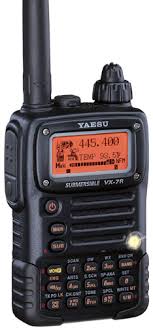
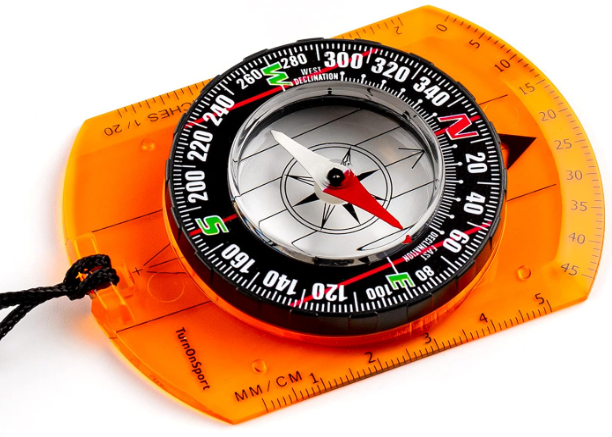
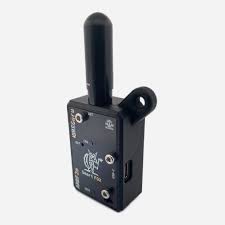
Transmitters
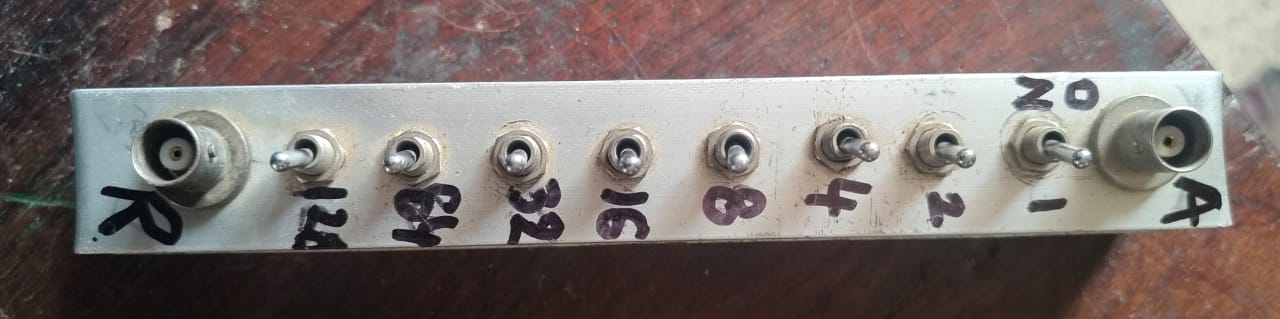
An orienteering transmitter is a low-power radio device hidden in a foxoring or ARDF event. The transmitters emit unique signals on specific frequencies, either in Morse code or recorded voice, to identify themselves. They operate at very low power (10 to 200 milliwatts) to cover only short distances, typically less than 100 meters in Fox Oring.
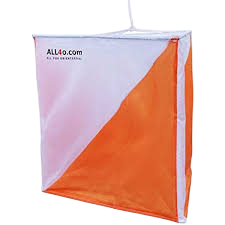
Orienteering Flags
Orienteering flags, which are typically orange and white triangular markers, are used as control points in navigation challenges like orienteering races and for training purposes. They are placed in the terrain to indicate the location of checkpoints and are used in conjunction with control cards and punches to register a participant's progress in finding the correct locations.
Orienteering Punches
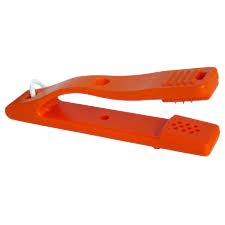
Orienteering punches are used to mark a runner's control card at designated locations in an orienteering or navigation course, confirming they have visited each required control point. The unique patterns on these punches are unique to each control, proving the participant's successful completion of the course
Orienteering Electronic Punches
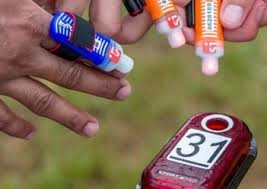
Orienteering electronic punches are SPORTident or Emit electronic systems that record a runner's time at each control point using a physical "SI-card" or "finger stick" that interacts with electronic stations. These systems replace manual punching, offering more exciting course setting, reduced organizer workload, and multiple evaluation options for coaches and runners.